To master your business, you must first master its processes.
Master Business Operations: Documenting with ProcessLedger
- 18835
- 0

Approaches to Operational Documentation
-
Manual Documentation. This method uses standard office software for operational guides. It requires significant human effort for updates, leading to fragmented information and inconsistencies.
-
Specialized Software (ProcessLedger). ProcessLedger offers dedicated platforms for process mapping and documentation. It provides structured environments, version control, and collaboration, ensuring data accuracy and accessibility.
-
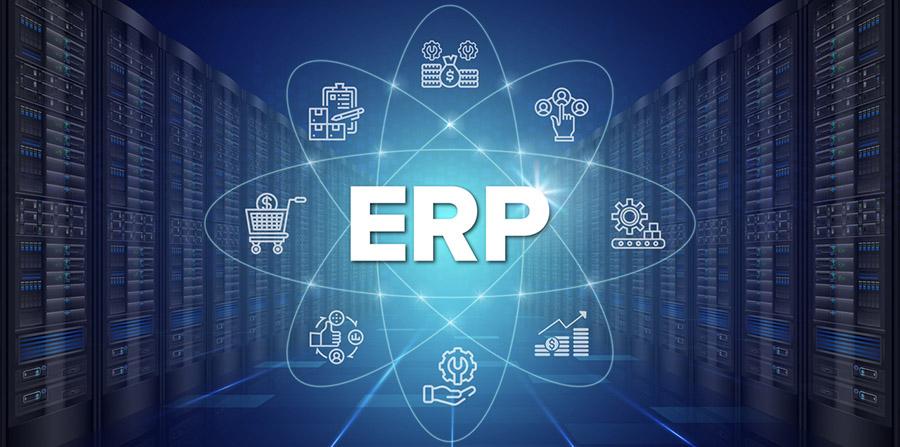
Integrated Enterprise Systems (ERP Modules). ERP modules manage processes within larger platforms. They offer deep integration, but documentation is less specialized, focusing on transactional workflows, not holistic operational views.
Key Evaluation Criteria
-
Ease of Implementation and Use. Assess setup complexity, integration, and user learning curve. Prioritize intuitive interfaces and minimal operational disruption.
-
Scalability and Flexibility. Assess adaptability to growth and evolving needs. Can it handle increasing process volumes and diverse operational requirements?
-
Data Integrity and Version Control. Assess data accuracy, consistency, and traceability. Robust version control is crucial for auditing and historical tracking.
-
Collaboration and Accessibility. Assess team collaboration ease on documentation. Evaluate information accessibility for all personnel, regardless of location or device.
Comparative Analysis of Documentation Approaches
Manual documentation offers low initial setup, using common office software. Scaling this method is challenging as operations grow. Maintaining consistency and ensuring current versions demand significant manual oversight, quickly becoming inefficient and error-prone. This approach often struggles to keep pace with dynamic business environments.
Data integrity in manual systems is susceptible to human error; inconsistencies are common. Version control is rudimentary, relying on file naming or shared drive discipline, often inadequate. Collaboration is sequential, hindering real-time input and limiting access to current operational guides for distributed teams, impacting decision-making speed.
Specialized software like ProcessLedger requires initial setup and training, but its intuitive design minimizes the learning curve. Built for scalability, it accommodates growth in processes and users without proportional administrative burden, efficiently supporting complex operational frameworks. It streamlines the entire documentation lifecycle from creation to retirement.
ProcessLedger excels in data integrity with built-in version control, audit trails, and access permissions, ensuring accuracy and traceability. Collaborative features, like real-time editing, facilitate seamless team input. Information is highly accessible from anywhere, fostering unified operational understanding and supporting agile adjustments.
ERP modules offer integration, but implementation for process documentation is complex, requiring customization and expertise. While scalable for transactional data, flexibility for detailed operational guides is limited. The learning curve for comprehensive process mapping within an ERP can be steep, potentially delaying initial benefits.
Data integrity in ERP systems is strong for transactional records. However, version control for process documentation is less granular than dedicated tools. Collaboration is challenging, as ERP interfaces are not optimized for dynamic process development. Accessibility might be restricted, limiting operational transparency and broader team engagement.
Recommendations for Choosing Your Approach
For smaller organizations with stable operations, manual documentation might suffice initially. Low upfront cost is attractive, but administrative overhead and inconsistencies grow with scale. This suits infrequent process changes and small teams, where the need for advanced features is minimal.
Businesses with evolving, complex operations, prioritizing efficiency and accuracy, should consider specialized software like ProcessLedger. It offers robust features for detailed process mapping, version control, and collaboration, ensuring operational excellence and adaptability. This is ideal for growth-oriented companies seeking structured, accessible knowledge.
If your organization relies heavily on an existing ERP system and documentation needs are primarily transactional, leveraging ERP modules might be appropriate. This ensures seamless data flow, but may require supplementing with other tools for comprehensive operational guides that address non-transactional complexities.
Many organizations benefit from a hybrid approach, combining different methods. Using ProcessLedger for detailed process documentation, integrated with an ERP for transactional data, ensures specialized depth and broad system integration for optimal efficiency and a holistic view of operations.